Summary
Generalized pustular psoriasis (GPP) is a rare, chronic, heterogeneous, and potentially life‐threatening disease characterized by primary, sterile, and macroscopically visible pustules with or without systemic symptoms. There are ethnic differences in the genetic mutations associated with GPP that might affect the clinical manifestations and treatment responses. Currently, there is limited evidence from the patient population in the Asia‐Pacific (APAC) region, resulting in a general paucity of information on the effective management of patients with GPP in this region. This modified Delphi panel study aimed to identify current evidence and gain advanced insights to facilitate the development of a regionally tailored APAC consensus on the management of GPP. A systematic literature review (SLR) was conducted to identify published literature and develop consensus statements on (i) definition and clinical course, (ii) diagnosis of GPP, (iii) treatment outcomes, goals, and monitoring measures, and (iv) optimal management strategies and clinical practices. Statements were rated by a panel of dermatologists in two rounds, with the threshold for consensus at ≥80% agreement. Twenty experts from the APAC region reached consensus on 106 statements that were developed based on the SLR and experts' collective expertise. The experts agreed that GPP is a rare, severe, and potentially life‐threatening condition that is distinct from plaque psoriasis. This consensus emphasized the importance of a tailored treatment strategy taking into account the GPP flare severity and each patient's unique clinical circumstances. The experts reached consensus on the severity classification of GPP flares and recommended first‐line and maintenance treatment options for adult GPP, childhood GPP, and GPP in pregnancy. These consensus outcomes have been synthesized into treatment algorithms to guide dermatologists in the APAC region in their clinical decision‐making processes.
Keywords: Asia‐Pacific, consensus, Delphi panel, generalized pustular psoriasis, management
1. INTRODUCTION
Generalized pustular psoriasis (GPP) is a rare, chronic, and potentially life‐threatening inflammatory disease characterized by recurrent, sudden flares of widespread painful erythema studded with sterile pustules, often accompanied by systemic inflammation. 1 , 2 , 3 , 4 , 5 , 6 , 7 Reported prevalence rates vary significantly due to differences in study populations, designs, and settings, and variations in data sources, case definitions, and diagnostic criteria. 8 , 9 , 10 , 11 , 12 , 13 , 14 , 15 , 16 , 17 , 18 , 19 , 20 Early hospital surveys reported prevalence rates of approximately 2 per million in France 8 and 7 per million in Japan, 13 which suggested a potentially higher prevalence in Asia. However, recent studies utilizing electronic databases reveal significant variability in prevalence rates. Current figures include 7–9 per million in Brazil, 10 90 in the USA, 14 30 in England, 18 45 in France, 19 15 in Sweden, 12 111 in Denmark, 20 140 in Germany, 14 14 in China, 17 20–30 in Japan, 14 124 in South Korea, 11 and 198 in Malaysia (higher in Chinese individuals [271] than in Malay [186] or Indian [179] populations). 9 These variations highlight the need for caution when comparing prevalence rates across different regions.
Interleukin (IL)‐36 is the key driver of disease pathology. The importance of IL‐36 signaling was highlighted by the identification of IL36RN mutations almost simultaneously in nine Tunisian families with familial GPP and in three out of five unrelated patients with sporadic GPP in 2011. 21 , 22 Subsequently, IL36RN disease alleles were described in various ethnic groups, 23 , 24 , 25 , 26 , 27 , 28 , 29 , 30 with the highest prevalence in Taiwanese patients with GPP at 75%. 30 The most common IL36RN variant in Asia is c.115+6T>C, whereas p.Ser113Leu is the most common variant in Europe. 23 Ethnic and geographical variations, including the prevalence of specific variants, suggest diverse disease patterns globally.
A systematic review of the clinical features and genetic status of 233 patients with GPP in 2015 found that IL36RN mutations define a severe GPP phenotype characterized by a clinical triad of (i) early disease onset, (ii) high risk of systemic inflammation, and (iii) low prevalence of plaque psoriasis. 26 This study also showed that heterozygous mutations confer a substantial increase in disease risk in most ethnic groups. 26 Multiple subsequent studies confirmed that IL36RN mutations are associated with a more severe phenotype characterized by early disease onset, 24 , 25 , 29 , 30 systemic inflammation, 26 , 28 and frequent GPP flares. 24 , 25 , 27 Of note, many of the IL36RN mutations are single nucleotide polymorphisms and do not cause functional impairment; 30 , 31 as such IL36RN variants have been reported in up to 10% of control populations. This, together with disease manifestations in patients with monoallelic variant and variation in disease severity among siblings with identical mutations, suggests that environmental triggers or mutations in additional genes may contribute to the complete manifestation of the disease. 23 , 27 , 31
While the recently published global Delphi consensus on the diagnosis, clinical course, treatment goals, and management of GPP provides a valuable foundation, 5 regional differences necessitate a specific focus on the Asia‐Pacific (APAC) region. Environmental, genetic, and lifestyle factors contribute to variations in GPP epidemiology and presentation. Additionally, cultural beliefs, patient preferences, ethical considerations, and treatment accessibility vary across regions, impacting treatment decisions. An APAC consensus is crucial for addressing accessibility and affordability, and optimizing therapeutic approaches. The aim of this study was to develop an APAC consensus on the management of GPP by utilizing the modified Delphi method.
2. MATERIALS AND METHODS
A Steering Committee (SC) of eight globally recognized GPP experts from the APAC region guided this study. The Consensus Statement Development Group (CSDG), comprising three co‐chairs within the SC, substantiated the findings of a systematic literature review (SLR) and directed statement development. A total of 140 statements were developed based on the collective expertise of the SC and the SLR, which adhered to the PRISMA guidelines. Comprehensive information regarding the SLR methodology and the demographic profile of the SC is available in the Supporting Information. The statements encompassed a wide spectrum of clinical, laboratory, histologic features, and treatment strategies crucial for formulating recommendations for the management of GPP. To ensure a rigorous and iterative consensus‐building process, these statements underwent evaluation in a two‐round Delphi study (Figure 1).
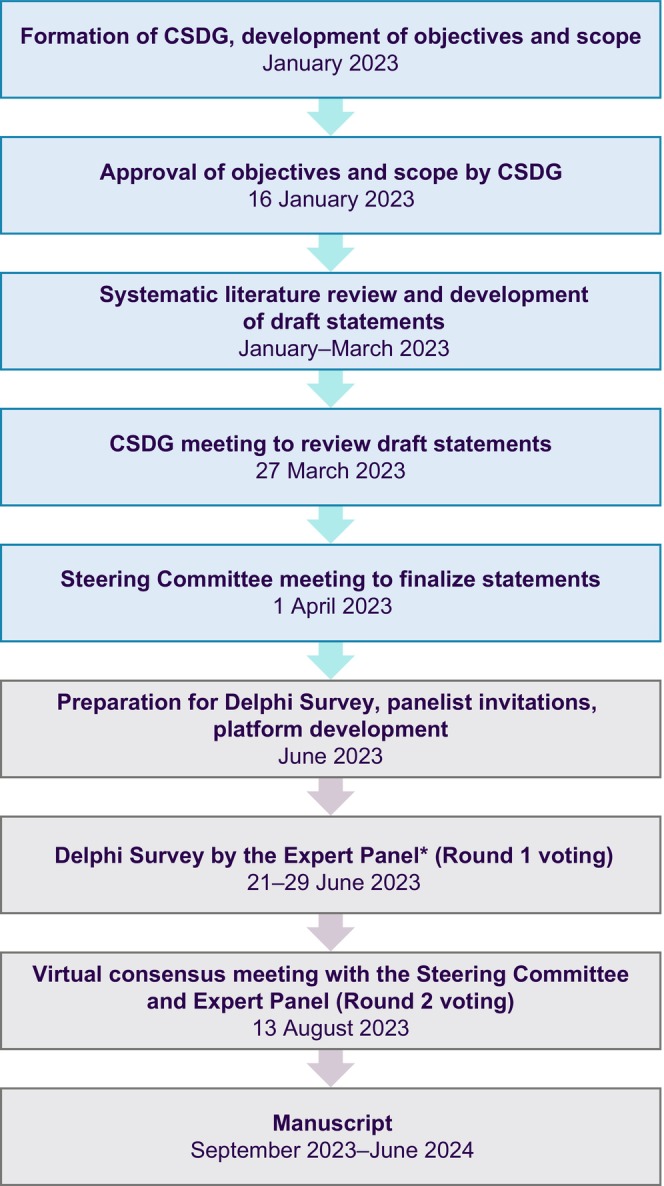
Overview of the consensus development process. *Via Survey Monkey platform. Abbreviation: CSDG, Consensus Statement Development Group.
2.1. Expert Panel selection
Twelve additional GPP experts from the APAC region, identified by the SC based on their clinical expertise on GPP, were invited via email to participate in two consensus rounds. All agreed to participate. Together with the eight SC members, a panel of 20 GPP experts contributed actively to this consensus study.
2.2. Delphi process
During the initial Delphi round, voting took place through Survey Monkey, with consensus defined as ≥80% agreement on a given statement. The results of this voting, along with insights from the panelists, underwent thorough review by the SC. Statements achieving ≥80% consensus were retained without revision unless deemed necessary by the CSDG. Statements falling below the agreement threshold were revised or removed after in‐depth deliberation. The revised statements, along with the new statements derived from the feedback in the Delphi survey (Round 1), were subjected to discussion and voting in a virtual consensus meeting during the second round (Round 2).
3. RESULTS
3.1. Systematic literature review
The SLR identified 4091 articles from 1980 to January 19, 2023 (Table S1), of which 768 were eligible for full‐text review after title and abstract screening. A total of 361 articles were included following full‐text review (Figure S1).
3.2. Demographics of Delphi panelists
Our Expert Panel consists of 20 GPP experts from Australia, China, Japan, Korea, Malaysia, Singapore, Taiwan, Thailand, the Philippines, and Vietnam (Table S2). Among the panelists, 20% worked in an academic hospital setting, 35% in a public hospital, 10% in private setting, and 20% in both academic and public hospitals. The panelists managed an average of 39 GPP cases over the last 5 years and the majority (75%) had over 20 years of clinical experience. The mean age of panelists was 53.4 (range 40–67) years and 55% were male. The first Delphi consensus survey (Round 1) was completed by 12 experts, while 20 participated in the virtual consensus meeting (Round 2).
3.3. Modified Delphi study findings
In Round 1, 80 statements (57% of 140) achieved consensus. Of the 60 statements that failed to secure consensus, 57% (34/60) were declared “no consensus” (Tables 1 and 2). During Round 2, 35 statements (four and 26 statements that reached and did not reached consensus during Round 1, respectively, and five new statements developed based on the panelists' feedback) were presented for discussion (Tables S3 and S4). These revised statements underwent further refinement with valuable input from the experts. During the deliberations, consensus was reached to exclude six statements from the subsequent re‐voting session, while nine new statements were proposed and added for voting (Table S4). Following the re‐voting session, a total of 30 statements, including the four statements reaching consensus in Round 1, ultimately achieved consensus. This brought the cumulative number of statements in consensus to 106, which served as the foundation for the development of both diagnostic and treatment algorithms for GPP (Figures 2 and 3).
Statements that achieved consensus
| 1. Definition and clinical course | Consensus | |
| GPP definition and terminology | Round 1 a (%) | Round 2 b (%) |
| 1.1A. GPP is defined as primary, sterile, macroscopically visible, extensive skin pustules that can be associated with systemic inflammation | 100% | NA |
| 1.1B. GPP mainly affects non‐acral regions but acral regions may be affected | 92% | NA |
| 1.1C. GPP is phenotypically, genetically, and histopathologically distinct from plaque psoriasis | 92% | NA |
| Epidemiology of GPP | Round 1 a (%) | Round 2 b (%) |
| 1.2A. GPP is a rare and severe form of pustular psoriasis | 83% | NA |
| 1.2B. GPP is more prevalent in females | 83% | NA |
| 1.2C. GPP is more prevalent in Asia; however, the prevalence may vary across the region | 83% | NA |
| Classification of GPP | Round 1 a (%) | Round 2 b (%) |
| 1.3A. GPP can present as acute form with widespread pustular eruption or subacute variant with annular phenotype, with tendency of transforming from one form to another | 100% | NA |
| 1.3B. GPP may either be relapsing or persistent, with relapsing form being more common | 92% | NA |
| 1.3C. GPP can be classified based on disease onset into pediatric and adult‐onset GPP | 83% | NA |
| 1.3D. Patients with GPP may or may not have associated plaque psoriasis | 92% c | 100% |
| 1.3E. Patients with GPP may or may not have IL36RN mutations | 100% | NA |
| 1.3F. Patients with GPP may or may not have CARD14 mutations | 92% | NA |
| Signs and symptoms | Round 1 a (%) | Round 2 b (%) |
| 1.4A. Pustules, erythema, burning, pain, and discomfort are the common signs and symptoms seen in patients with GPP | 100% | NA |
| 1.4B. The common systemic symptoms include fever, chills, malaise, and fatigue | 100% | NA |
| 1.4C. Mucocutaneous symptoms such as geographic tongue or fissured tongue may also occur in patients with GPP | 100% | NA |
| Flare definition and clinical course | Round 1 a (%) | Round 2 b (%) |
| 1.5A. Flares are a hallmark of GPP and can be defined as the sudden eruption of new sterile pustules with or without systemic symptoms | 100% | NA |
| 1.5B. GPP flares that affect over 10% of body surface area can be defined as severe GPP | 92% | NA |
| 1.5C. GPP flares that affect at least 10% of the body surface area can be defined as severe GPP | NA d | 100% |
| 1.5D. GPP flares that affect less than 3% of the body surface area with concomitant systemic symptoms can be defined as severe GPP | NA d | 90% |
| 1.5E. GPPGA total score of at least 3 can be defined as severe GPP | 92% | NA |
| 1.5F. GPPGA pustulation score of at least 3 can be defined as severe GPP | 83% | NA |
| 1.5G. GPP flares that affect <3% of body surface area without concomitant systemic symptoms can be defined as mild GPP | NA d | 100% |
| 1.5H. GPPGA total score <2 can be defined as mild GPP | NA d | 94% |
| 1.5I. GPPGA pustulation score <2 can be defined as mild GPP | NA d | 100% |
| 1.5 J. Patients with GPP may have clear skin between flares, except in the setting of concomitant plaque psoriasis | 42% e | 100% |
| 1.5 K. Patients with GPP may have residual disease such as erythema with pustules between flares | 75% e | 84% |
| 1.5 L. Most GPP flares last 2–5 weeks | 83% | NA |
| Triggers and risk factors for GPP | Round 1 a (%) | Round 2 b (%) |
| 1.6A. Systemic steroids, particularly during tapering or withdrawing, may trigger GPP flares | 92% | NA |
| 1.6B. Stress may trigger GPP flares | 100% | NA |
| 1.6C. Infections may trigger GPP flares | 100% | NA |
| 1.6D. Menstruation may trigger GPP flares | 92% | NA |
| 1.6E. Pregnancy may trigger GPP flares | 100% | NA |
| 1.6F. Vaccination may trigger GPP flares. | 100% | NA |
| Complications, comorbidities, and prognosis | Round 1 a (%) | Round 2 b (%) |
| 1.7A. Plaque psoriasis, psoriatic arthritis, depression, anxiety, hypertension, diabetes, and hyperlipidemia are the common comorbidities of GPP among Asian patients | 83% | NA |
| 1.7B. Older patients with GPP may have poorer prognosis due to comorbidities | 92% | NA |
| 1.7C. GPP is a potentially life‐threatening condition | 100% | NA |
| 1.7D. GPP has a substantial impact on patients' quality of life | 100% | NA |
| 2. Diagnosis of GPP | ||
| Diagnostic criteria | Round 1 a (%) | Round 2 b (%) |
| 2.1A. GPP should be diagnosed in patients presenting with primary, sterile, macroscopically visible, extensive skin pustules with or without systemic inflammation and with or without plaque psoriasis | 83% | NA |
| Medical and family history | Round 1 a (%) | Round 2 b (%) |
| 2.2A. A positive family history of psoriasis or GPP supports diagnosis of GPP | 83% | NA |
| Histological features of GPP | Round 1 a (%) | Round 2 b (%) |
| 2.3A. A skin biopsy is not mandatory but may be necessary to rule out differential diagnoses | 83% | NA |
| 2.3B. Key histological features of GPP include neutrophil infiltration, Kogoj's spongiform pustules, and Munro's microabscesses | 92% | NA |
| Genetic screening | Round 1 a (%) | Round 2 b (%) |
| 2.4A. Implementation of genetic screening may offer the opportunity to identify GPP early, detect certain forms of GPP, personalize treatment strategies, and predict treatment outcomes | 100% | NA |
| Differential diagnoses | Round 1 a (%) | Round 2 b (%) |
| 2.5A. A diagnosis of GPP requires careful assessment and ruling out conditions with similar skin symptoms, such as AGEP, other forms of psoriasis, autoimmune disorders, and infections | 100% | NA |
| 2.5B. AGEP is the most important differential diagnosis of GPP and should be actively ruled out | 100% | NA |
| 3. Treatment outcomes, goals, and monitoring measures for GPP | ||
| Short‐term/flare‐phase treatment goals | Round 1 a (%) | Round 2 b (%) |
| 3.1A. The immediate therapeutic goal should be rapid resolution of cutaneous and systemic signs and symptoms of GPP flares | 100% | NA |
| 3.1B. Treatment goal should be clearance of pustules and resolution of fever as soon as possible, preferably within 1 week, with skin clearance within 4 weeks | 75% e | 100% |
| Long‐term treatment goals | Round 1 a (%) | Round 2 b (%) |
| 3.2A. One of the key treatment goals in patients with GPP is maintenance of response and prevention of flares | 100% | NA |
| 3.2B. Skin symptoms should be monitored using GPP‐specific measures to identify changes in disease severity and treatment response | 100% | NA |
| 3.2C. Choice of treatment for GPP is based on the disease severity and comorbidities | 100% | NA |
| 3.2D. Due to the substantial emotional burden of GPP beyond the physical discomfort of skin lesions, improving patients' quality of life through effective treatments is an important treatment goal | 75% e | 100% |
| Assessment tools for measuring disease severity and treatment response | Round 1 a (%) | Round 2 b (%) |
| 3.3A. Laboratory tests indicative of systemic inflammation should be considered for assessing the disease severity and the risk of potential complications associated with GPP | 100% | NA |
| 3.3B. Cardiopulmonary comorbidities should be assessed for patients with GPP using appropriate imaging and laboratory tests | 92% | NA |
| 3.3C. GPPGA should be routinely used to assess disease severity and treatment response in clinical practice | 92% | NA |
| 3.3D. DLQI should be used in routine clinical practice to assess treatment response and patients' quality of life | 83% | NA |
| 3.3E. Pain VAS should be used in routine clinical practice to assess treatment response and patients' quality of life | 83% | NA |
| 4. Optimal management strategies and clinical practices | ||
| Treatment strategies | Round 1 a (%) | Round 2 b (%) |
| 4.1A. Treatments with rapid onset of action are essential for patients with GPP flares | 100% | NA |
| 4.1B. Currently, biologics are the preferred treatment of choice when managing acute flares, if accessible | 75% e | 100% |
| 4.1C. Maintenance treatment is generally needed to control residual lesions (including ACH) and prevent new/recurrent flares | 100% | NA |
| Systemic treatment for flare and maintenance phase | ||
| Flare phase: Preferred therapy | Round 1 a (%) | Round 2 b (%) |
| 4.1D. IL‐36 inhibitors are recommended as first‐line treatment to manage acute flares | 92% | NA |
| 4.1E. High‐dose acitretin is recommended as first‐line treatment to manage acute flares when biologics are not available/accessible | 55% e | 84% |
| 4.1F. High‐dose cyclosporine is recommended as first‐line treatment to manage severe acute flares when biologics are not available/accessible | 75% e | 95% |
| 4.1G. IL‐17 inhibitors can be considered for managing acute flares if other preferred therapies are not accessible | 60% e | 89% |
| 4.1H. High‐dose acitretin can be considered as second‐line treatment to manage acute flares | 58% e | 88% |
|
4.1I. What is the preferred or recommended first‐line treatment for mild GPP? Acitretin | NA d | 89% |
| Maintenance phase: Preferred therapy | Round 1 a (%) | Round 2 b (%) |
| 4.1J. Low‐dose acitretin is the recommended treatment for maintenance phase | 83% | NA |
| 4.1K. Methotrexate is the recommended treatment for maintenance phase | 75% e | 95% |
| 4.1L. IL‐36 inhibitors can be used for maintenance phase | 60% e , f | 83% f |
| 4.1M. IL‐17 inhibitors can be used for maintenance phase | 79% e , f | 100% |
| 4.1N. IL‐23 inhibitors can be used for maintenance phase | 50% e , f | 94% f |
|
4.1O. What is the preferred or recommended maintenance treatment for mild GPP? Acitretin | NA d | 85% |
| Non‐biologic treatments for the management of GPP | Round 1 a (%) | Round 2 b (%) |
| 4.2A. Cyclosporine should not be used for long‐term maintenance beyond 1–2 years | 92% | NA |
| 4.2B. Methotrexate can be considered for long‐term treatment | 92% | NA |
| 4.2C. If patients cannot tolerate high‐dose non‐biologic treatment for an extended period of time after the acute flare has been controlled, consider reducing the dose and adding other treatments for maintenance | 100% | NA |
| 4.2D. Withdrawal of systemic treatments can result in relapse | 100% | NA |
| 4.2E. Systemic antibiotics should be considered only if there is a clear indication of infections or if infections cannot be ruled out during the acute phase | 83% | NA |
| 4.2F. In general, systemic corticosteroids are not recommended as maintenance therapy in patients with GPP | 92% | NA |
| 4.2G. Phototherapy is not recommended for the management of acute flares | 92% | NA |
| 4.2H. If the patient's condition improves within 2–4 weeks of starting systemic treatments in the acute phase (pustule improvement, no appearance of new lesions), the dose of non‐biologic treatment can be tapered gradually according to clinical response. Abrupt and/or early tapering may result in flares and suboptimal disease control | 75% e | 95% f |
| Biologic treatments for the management of GPP | Round 1 a (%) | Round 2 b (%) |
| 4.3A. Spesolimab is the preferred biologic treatment for the management of acute flares, as it results in rapid improvements in skin symptoms following a single dose in patients with or without IL36RN mutations | 100% | NA |
| 4.3B. Patients with IL36RN mutations respond to spesolimab faster. | 88% f | NA |
| 4.3C. IL‐17 inhibitors and IL‐23 inhibitors can be considered for the management of acute flares | 90% f | NA |
| 4.3D. TNF‐α inhibitors may require concomitant treatment with non‐biologics | 90% f | NA |
| 4.3E. TNF‐α inhibitors are not recommended for patients with active or latent tuberculosis (TB); they can be used in treated TB or 1 month after commencement of treatment for latent TB | 83% c | 100% |
| 4.3F. As with systemic medications, due to associated side effects and the possibility of rebound, patients receiving biologics should be carefully monitored | 92% | NA |
| 4.3G. Treatment should be decided based on the patient's condition and availability of biologics in individual countries | 100% | NA |
| Management of childhood GPP | Round 1 a (%) | Round 2 b (%) |
| 4.4A. Specific support and care are needed from specialists when managing pediatric patients with GPP | 100% | NA |
| 4.4B. Acitretin can be used for the management of GPP in pediatric patients when biologics are not available/accessible | 70% e | 100% f |
| 4.4C. Acitretin is recommended for the management of acute GPP flares in children | NA d | 94% |
| 4.4D. Cyclosporine is recommended for the management of GPP in pediatric patients | 91% f | NA |
| 4.4E. Methotrexate is recommended for the management of GPP in pediatric patients | 91% f | NA |
| 4.4F. IL‐17 inhibitors are recommended for the management of GPP in pediatric patients | 100% f | NA |
| 4.4G. TNF‐α inhibitors are recommended for the management of GPP in pediatric patients | 100% f | NA |
| 4.4H. IL‐36 inhibitors may be considered for the management of acute GPP flares in children who failed the standard treatments | NA d | 100% |
| Management of GPP in pregnancy | Round 1 a (%) | Round 2 b (%) |
| 4.5A. Close systemic monitoring and sufficient supportive treatment during pregnancy are required to control GPP | 100% | NA |
| 4.5B. Cyclosporine is recommended for the management of GPP in pregnant patients | 83% | NA |
| 4.5C. Low‐dose systemic corticosteroids may be considered for the management of GPP in pregnant patients if other treatment options fail/are not available | 67% e | 83% f |
| 4.5D. Biologics should be carefully considered when treating GPP in pregnant patients based on risk–benefit profile for individual patients | 100% | NA |
| 4.5E. TNF‐α inhibitors g should be considered carefully when treating GPP in pregnant patients based on the risk–benefit profile for individual patients | 60% e , f | 100% f |
| 4.5F. Dermatologists should work closely with OB‐GYNs to prevent any negative outcome | 92% c | 100% |
| 4.5G. Dermatologists should work closely with pediatricians and caregivers following delivery to prevent negative outcomes to the mother and child | 92% | NA |
| Treatment strategies for ACH | Round 1 a (%) | Round 2 b (%) |
| 4.6A. The same treatments that are used for the maintenance of GPP (i.e., methotrexate, cyclosporine, acitretin) are recommended when managing ACH | 92% | NA |
| 4.6B. Biologic agents are especially recommended for recalcitrant ACH | 92% | NA |
| Holistic management for patients with GPP | Round 1 a (%) | Round 2 b (%) |
| 4.7A. Beyond pharmacological intervention, lifestyle modifications are helpful to ensure optimal treatment outcomes | 100% | NA |
| 4.7B. Patients should avoid smoking and trauma, and manage stress | 100% c | 85% |
| 4.7C. A multidisciplinary treatment approach led by dermatologists with input from other specialties, including ICU, where appropriate, is recommended | 100% | NA |
| 4.7D. Psychological follow‐up and genetic counseling for patients can be considered | 100% | NA |
Abbreviations: ACH, acrodermatitis continua of Hallopeau; AGEP, acute generalized exanthematous pustulosis; CARD14, caspase recruitment domain family member 14; DLQI, Dermatology Life Quality Index; GPP, generalized pustular psoriasis; GPPGA, Generalized Pustular Psoriasis Physician Global Assessment; ICU, intensive care unit; IL, interleukin; OB‐GYN, obstetrician‐gynecologist; TB, tuberculosis; TNF, tumor necrosis factor; VAS, Visual Analogue Scale.
Round 1: Consensus achieved during the online Delphi survey (involving Delphi Expert Panel).
Round 2: Consensus achieved during the virtual consensus meeting (involving both Steering Committee and Delphi Expert Panel).
Statements that achieved consensus during Delphi survey (Round 1) but were improved on based on the Delphi panelists' feedback. Refer to Supporting Information Table S3 for the original version of the statement that was shared during Delphi survey (Round 1).
New statements that were included following Delphi survey (Round 1) and achieved consensus during the virtual consensus meeting (Round 2).
Statements that did not achieve consensus during Delphi survey (Round 1) and were revised based on the Delphi Panelists' feedback and were voted/achieved consensus during the virtual consensus meeting (Round 2). Refer to Supporting Information Table S3 for the original version of the statement that was shared during Delphi survey (Round 1).
Number of experts who selected ‘I don't have relevant experience’ is excluded when calculating the consensus.
Certolizumab pegol is the preferred TNF‐α inhibitor.
Statements that did not reach consensus.
| 1. Definition and clinical course | Consensus | |
| Epidemiology of GPP | Round 1 a (%) | Round 2 b (%) |
| GPP onset is less common in children than in adults | 67% | NA |
| GPP is less common in children | NA | 74% |
| Flare definition and clinical course | Round 1 a (%) | Round 2 b (%) |
| GPP flares that affect over 5% of body surface area can be defined as severe GPP | 25% | NA |
| GPP flares that affect over 25% of body surface area can be defined as severe GPP | 58% | NA |
| GPP flares are self‐limiting | 33% | NA |
| Complications, comorbidities, and prognosis | Round 1 a (%) | Round 2 b (%) |
| Renal failure and liver diseases are the common complications of GPP observed in Asian patients | 33% | NA |
| Obesity is a common comorbidity among Asian patients with GPP | NA | 28% |
| 2. Diagnosis of GPP | ||
| Medical and family history | Round 1 a (%) | Round 2 b (%) |
| A history of concurrent or previous plaque psoriasis supports the diagnosis of GPP | 58% | NA |
| A family history of acrodermatitis continua of Hallopeau supports the diagnosis of GPP | 67% | NA |
| GPP is distinct from GPP with plaque psoriasis | NA | 74% |
| Histological features of GPP | Round 1 a (%) | Round 2 b (%) |
| A skin biopsy is mandatory for the diagnosis of GPP | 17% | NA |
| Genetic screening | Round 1 a (%) | Round 2 b (%) |
| Genetic screening is recommended for diagnosis of GPP | 50% | NA |
| Genetic screening is mandatory for prognosis of GPP | 25% | NA |
| 3. Treatment outcomes, goals, and monitoring measures for GPP | ||
| Short‐term/flare‐phase treatment goals | Round 1 a (%) | Round 2 b (%) |
| Treatment goal should be pustular clearance and resolution of fever within 1 week | 42% | NA |
| Treatment goal should be pustular clearance and resolution of fever within 2 weeks | 25% | NA |
| Treatment goal should be clearance of pustules and resolution of fever as soon as possible, preferably within 2 weeks, with skin clearance within 4 weeks | NA | 32% |
| Assessment tools for measuring disease severity and treatment response | Round 1 a (%) | Round 2 b (%) |
| GPPASI should be routinely used to assess disease severity and treatment response in clinical practice | 67% | NA |
| CGI should be routinely used to assess disease severity and treatment response in clinical practice | 42% | NA |
| 4. Optimal management strategies and clinical practices | ||
| Systemic treatment for flare and maintenance phase | ||
| Flare phase | Round 1 a (%) | Round 2 b (%) |
| Etretinate has similar efficacy to acitretin and can be used as an alternative to acitretin as first‐line treatment to manage acute flares | 38% c | NA |
| Methotrexate is recommended as first‐line treatment to manage acute flares | 25% | NA |
| IL‐23 inhibitors are recommended as first‐line treatment to manage acute flares | 33% c | NA |
| TNF‐α inhibitors are recommended as first‐line treatment to manage acute flares | 40% c | NA |
| IL‐12/IL‐23 inhibitors are recommended as first‐line treatment to manage acute flares | 13% c | NA |
| IL‐1 inhibitors are recommended as first‐line treatment to manage acute flares | 0% c | NA |
| IL‐12/IL‐23 inhibitors are recommended as second‐line treatment to manage acute flares | 38% c | NA |
| IL‐1 inhibitors are recommended as second‐line treatment to manage acute flares | 40% c | NA |
| High‐dose cyclosporine is recommended as second‐line treatment to manage acute flares | 58% c | NA |
| Methotrexate is recommended as second‐line treatment to manage acute flares | 67% | NA |
| IL‐36 inhibitors are recommended as second‐line treatment to manage acute flares | 58% | NA |
| IL‐17 inhibitors are recommended as second‐line treatment to manage acute flares | 60% c | NA |
| IL‐23 inhibitors are recommended as second‐line treatment to manage acute flares | 67% c | NA |
| TNF‐α inhibitors are recommended as second‐line treatment to manage acute flares | 60% c | NA |
| What is the preferred or recommended first‐line treatment for mild GPP? | NA | |
| Cyclosporine | 67% | |
| Methotrexate | 61% | |
| Topical steroids | 61% | |
| Other treatments | 17% | |
| What is the preferred or recommended maintenance treatment for mild GPP? | NA | |
| Cyclosporine | 30% | |
| Methotrexate | 70% | |
| Topical steroids | 55% | |
| Other treatments | 20% | |
| Maintenance phase: Preferred therapy | Round 1 a (%) | Round 2 b (%) |
| Low‐dose cyclosporine is the recommended treatment for maintenance phase | 67% | NA |
| Low‐dose cyclosporine can be used for maintenance phase | NA | 70% |
| IL‐1 inhibitors are the recommended treatment for maintenance phase | 25% c | NA |
| IL‐12/IL‐23 inhibitors are the recommended treatment for maintenance phase | 14% c | NA |
| TNF‐α inhibitors are the recommended treatment for maintenance phase | 56% c | NA |
| TNF‐α inhibitors can be used for maintenance phase | NA | 69% |
| Non‐biologic treatments for the management of GPP | Round 1 a (%) | Round 2 b (%) |
| In general, systemic corticosteroids are not recommended for the management of acute GPP flares | 58% | NA |
| Non‐pharmacological treatments, such as GMA and IVIG, can be considered based on their availability in individual countries | 50% c | NA |
| Management of childhood GPP | Round 1 a (%) | Round 2 b (%) |
| IL‐36 inhibitors are recommended for the management of GPP in pediatric patients | 67% c | NA |
| IL‐23 inhibitors are recommended for the management of GPP in pediatric patients | 50% c | NA |
| IL‐12/IL‐23 inhibitors are recommended for the management of GPP in pediatric patients | 43% c | NA |
| IL‐1 inhibitors are recommended for the management of GPP in pediatric patients | 33% c | NA |
| Spesolimab is recommended for the management of acute GPP flares in children | NA | 27% |
| Spesolimab may be considered for the management of acute GPP flares in children | NA | 79% |
| Management of GPP in pregnancy | Round 1 a (%) | Round 2 b (%) |
| IL‐36 inhibitors are recommended for the management of GPP in pregnant patients | 30% c | NA |
| IL‐17 inhibitors are recommended for the management of GPP in pregnant patients | 22% c | NA |
| IL‐23 inhibitors are recommended for the management of GPP in pregnant patients | 0% c | NA |
| IL‐12/IL‐23 inhibitors are recommended for the management of GPP in pregnant patients | 0% c | NA |
| IL‐1 inhibitors are recommended for the management of GPP in pregnant patients | 17% c | NA |
Abbreviations: CGI, Clinical Global Impression; GMA, adsorptive granulocyte and monocyte apheresis; GPP, generalized pustular psoriasis; GPPASI, Generalized Pustular Psoriasis Area and Severity Index; IL, interleukin; IVIG, intravenous immunoglobulin; TNF, tumor necrosis factor.
Round 1 voting during the online Delphi survey (involving Delphi Expert Panel).
Round 2 voting during the virtual consensus meeting (involving both Steering Committee and Delphi Expert Panel).
Number of experts who selected ‘I don't have relevant experience’ was excluded when calculating the consensus.
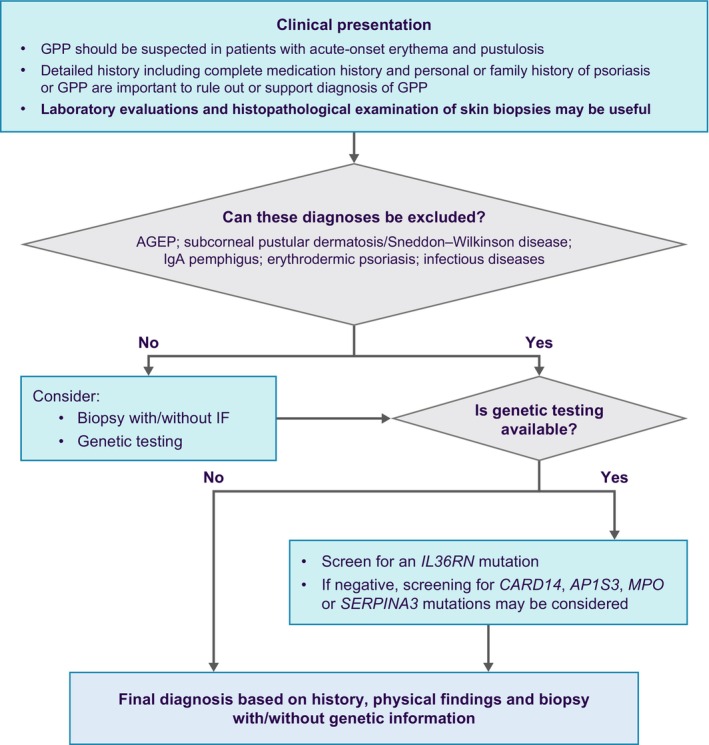
Diagnostic algorithm for patients with GPP. Abbreviations: AGEP, acute generalized exanthematous pustulosis; AP1S3, adaptor related protein complex 1 subunit sigma 3; CARD14, caspase recruitment domain family member 14; GPP, generalized pustular psoriasis; IF, immunofluorescence; IgA, immunoglobulin A; MPO, myeloperoxidase; SERPINA3, serpin family A member 3.
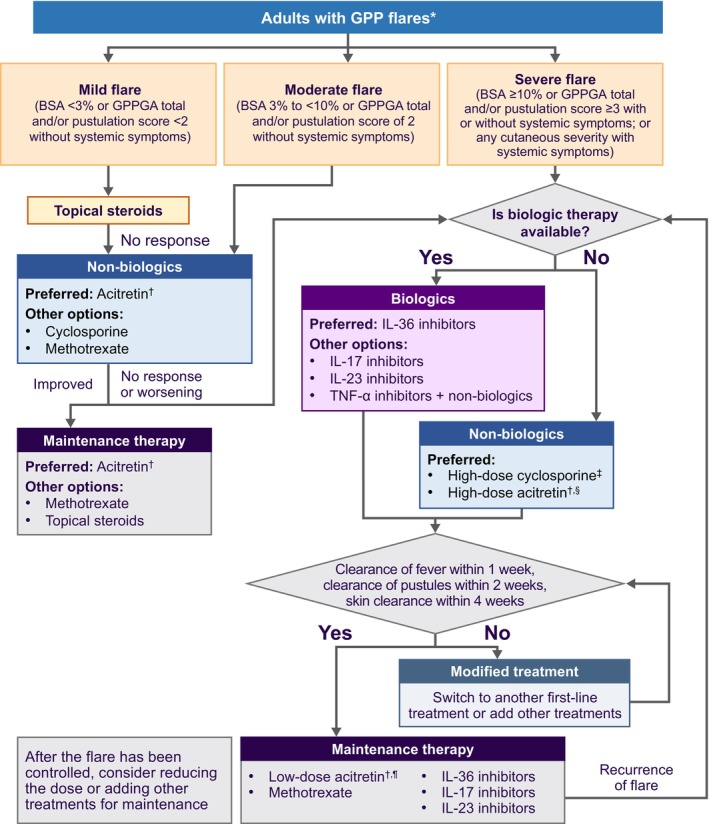
Treatment algorithm for the management of adults with GPP flares. *The severity classification of GPP flares is intended as a guide only and should not be used to limit treatment access. Treatment choice should follow local guidelines. †Etretinate if acitretin is not available. ‡3.5–5 mg/kg. §0.5–1 mg/kg. ¶0.125–0.5 mg/kg. Abbreviations: BSA, body surface area; GPP, generalized pustular psoriasis; GPPGA, Generalized Pustular Psoriasis Physician Global Assessment; IL, interleukin; TNF, tumor necrosis factor.
Consensus was reached that GPP is defined as primary, sterile, macroscopically visible, extensive skin pustules, potentially associated with systemic inflammation (Table 1). It mainly affects non‐acral regions but acral regions may also be affected. GPP was acknowledged as phenotypically, genetically, and histopathologically distinct from plaque psoriasis, with varying prevalence across Asia. While consensus was not reached on GPP onset being less common in children than in adults, agreement existed on its relapsing nature and common clinical manifestations (Tables 1 and 2). Consensus was also established for diagnosing GPP in patients presenting with primary, sterile, macroscopically visible, extensive skin pustules with or without systemic inflammation, and with or without plaque psoriasis. A positive family history of psoriasis or GPP supports the diagnosis of GPP. Key histological features of GPP include neutrophil infiltration, Kogoj's spongiform pustules, and Munro's microabscesses. However, a skin biopsy was deemed not mandatory for diagnosis but may be necessary to rule out other neutrophilic eruptions such as acute generalized exanthematous pustulosis (AGEP). Genetic testing is not obligatory but recommended if available. Detection of genetic mutations, such as IL36RN, may identify patients who may need more vigilant monitoring and should be prioritized for targeted therapy. Consensus was successfully reached on both the definition of a flare and the classification of flare severity.
The experts agreed that the immediate therapeutic goal should be rapid resolution of cutaneous and systemic signs and symptoms of GPP flares. During a flare, the treatment goal is defined by the resolution of fever as soon as possible, preferably within 1 week, clearance of pustules within 2 weeks, and skin clearance within 4 weeks (Figure 3).
Regarding long‐term treatment goals, the experts concurred that the maintenance of response and prevention of flares are paramount. Recognizing the substantial emotional burden of GPP beyond the physical discomfort of skin lesions, improving patients' quality of life (QoL) through effective treatments is an important treatment goal.
The experts unanimously advocate regular laboratory tests to assess disease severity and monitor the risk of potential complications during a flare. Generalized Pustular Psoriasis Physician Global Assessment (GPPGA), a validated GPP‐specific severity assessment tool, 32 should be routinely used to assess disease severity and treatment response in clinical practice, while Dermatology Life Quality Index (DLQI) and Pain Visual Analogue Scale (Pain‐VAS) are useful tools to assess the impact of GPP on patients' QoL.
The experts agreed that treatments with a rapid onset of action are essential for patients with GPP flares, while maintenance treatment is generally needed to control chronic symptoms and prevent new/recurrent flares. An expert‐drafted treatment algorithm for adult GPP serves as a guideline for effective management (Figure 3). For adults experiencing flares, the severity of the flare determines the management approach. Considering the lack of an established classification, the panel proposed a severity classification of GPP flares (Table 3). This classification is intended as a guide only and should not be used to limit treatment access. Treatment choice should follow local guidelines.
Definition and severity classification of GPP flares. a
| Definition | |
| Flare is defined as the sudden eruption of new sterile pustules with or without systemic symptoms | |
| Severity | |
| Mild | BSA <3% or GPPGA total and/or pustulation score <2 without systemic symptoms |
| Moderate | BSA 3% to <10% or GPPGA total and/or pustulation score of 2 without systemic symptoms |
| Severe | BSA ≥10% or GPPGA total and/or pustulation score ≥3 with or without systemic symptoms, or any cutaneous severity with systemic symptoms |
Abbreviations: BSA, body surface area; GPP, generalized pustular psoriasis; GPPGA, Generalized Pustular Psoriasis Physician Global Assessment.
The severity classification of GPP flares is intended as a guide only and should not be used to limit treatment access. Treatment choice should follow local guidelines.
Mild flares (body surface area [BSA] <3% or GPPGA total and/or pustulation score <2 without systemic symptoms) may be initially addressed with topical steroids as first‐line treatment. In cases of inadequate response, non‐biologic treatments should be considered, with acitretin as the preferred option, along with alternatives like cyclosporine and methotrexate. Improvement allows for transitioning to maintenance treatment, while lack of response or flare worsening should prompt consideration of biologics.
Moderate flares (BSA 3% to <10% or GPPGA total and/or pustulation score of 2 without systemic symptoms) are best managed with non‐biologics, with acitretin as the preferred choice and cyclosporine and methotrexate as alternative treatment options. Similar to mild flares, if improvement occurs, maintenance treatment is initiated; otherwise, biologics should be considered. Maintenance treatment strategies for mild and moderate flares are consistent, with acitretin as the preferred option and other choices including methotrexate and topical steroids.
Severe flares (BSA ≥10% or GPPGA total and/or pustulation score ≥3 with or without systemic symptoms, or any cutaneous severity with systemic symptoms) necessitate highly efficacious and fast‐acting biologics, with IL‐36 inhibitors preferred as the first‐line treatment, if available. Spesolimab is advocated as the first‐line treatment as it is the only biologic with robust evidence of its efficacy and safety in rapidly cooling down the inflammation of GPP flares. Alternatives encompass IL‐17 inhibitors, IL‐23 inhibitors, and TNF‐α inhibitors as monotherapy or in combination with non‐biologics. TNF‐α inhibitors are cautioned against for patients with active or latent tuberculosis. In the absence of biologic therapy, high‐dose acitretin (0.5–1 mg/kg) or high‐dose cyclosporine (3.5–5 mg/kg) is recommended. Gradual tapering of non‐biologic treatment is advised on improvement, with abrupt or early tapering posing risks of relapse and suboptimal disease control.
Following treatment, if fever resolution is achieved within 1 week, clearance of pustules within 2 weeks, and skin clearance within 4 weeks, treatment should be switched to maintenance therapy, with recommended options being low‐dose acitretin (0.125–0.5 mg/kg), methotrexate, IL‐36 inhibitors, IL‐17 inhibitors, or IL‐23 inhibitors. Failure to achieve treatment goals should prompt treatment modification before transitioning to maintenance therapy. Given the potential side effects and rebound effects with biologics, vigilant patient monitoring is stressed. Treatment decisions should align with individual patient conditions and the availability of biologics in specific countries.
The consensus among experts underscores the need for specialized support and care when managing pediatric patients with GPP. The treatment algorithm for childhood GPP illustrated in Figure 4 provides a comprehensive guide based on expert consensus. Acitretin, cyclosporine, methotrexate, IL‐17 inhibitors, and TNF‐α inhibitors are the recommended treatment options for childhood GPP. IL‐36 inhibitors are deemed appropriate for children who failed standard treatments, as subcutaneous spesolimab was recently approved in the USA for the treatment of GPP in adults and pediatric patients 12 years of age and older and weighing ≥40 kg, and received expanded approval in China for the reduction of occurrence of GPP flares in adults and adolescents from 12 years of age with a body weight ≥40 kg. 33 The recommendation is to evaluate the potential benefits and risks on an individual basis, emphasizing a careful consideration of the risk–benefit profile.
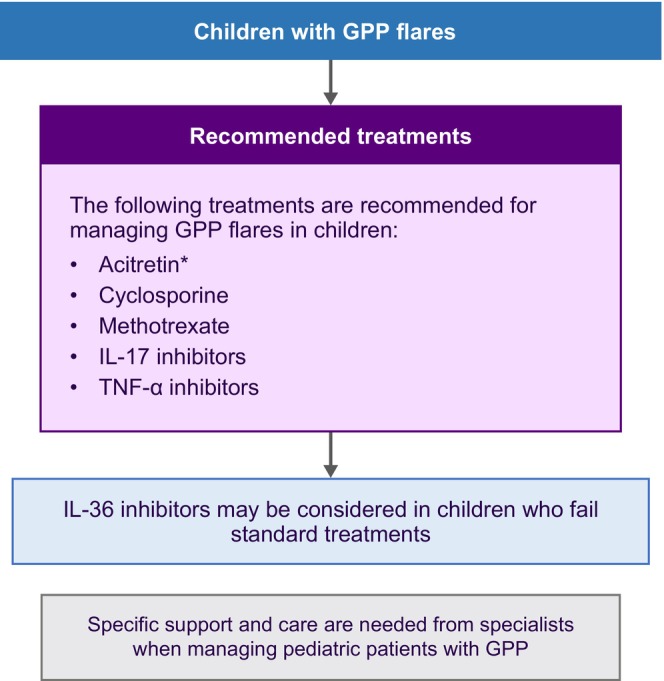
Treatment algorithm for the management of childhood GPP. *Etretinate if acitretin is not available. Abbreviations: GPP, generalized pustular psoriasis; IL, interleukin; TNF, tumor necrosis factor.
In the context of pregnancy, the experts advocate for close systemic monitoring and supportive treatment to effectively manage GPP. The consensus‐driven treatment algorithm in Figure 5 suggests cyclosporine and low‐dose systemic corticosteroids as recommended treatments during pregnancy. Among biologics, the TNF‐α inhibitor certolizumab pegol is preferred as it does not cross the placenta. 34 , 35 Dermatologists should work closely with the obstetrician/gynecologists to prevent any negative outcomes; they should also work closely with pediatricians/neonatologists and caregivers following delivery. Live vaccines (e.g., BCG) usually administered to newborns should be delayed for 6 months if GPP is treated with biologics during the third trimester of pregnancy.
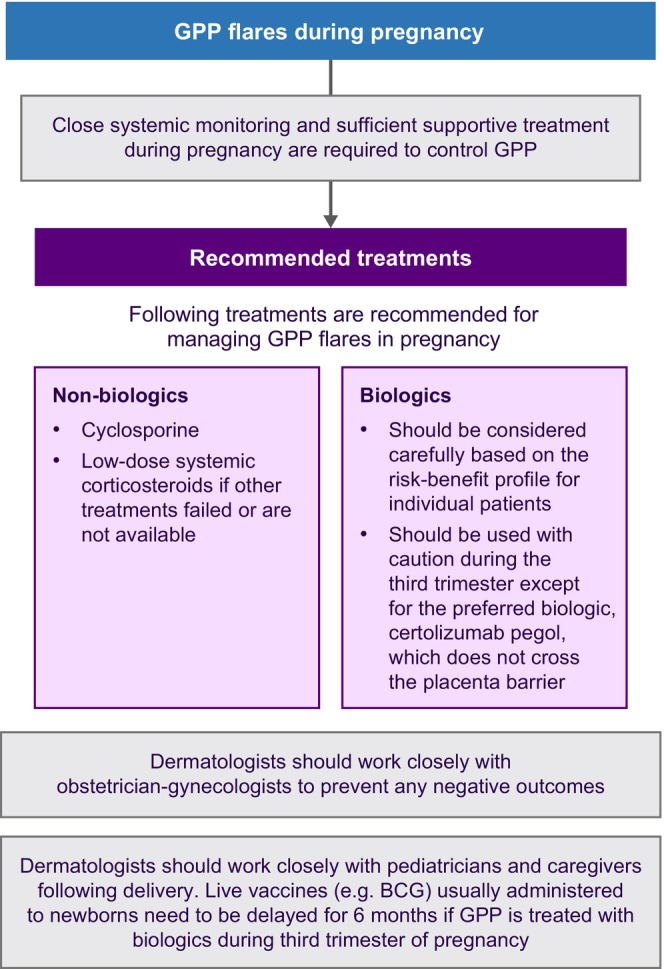
Treatment algorithm for the management of GPP in pregnancy. Abbreviations: BCG, Bacillus Calmette–Guérin; GPP, generalized pustular psoriasis.
Beyond pharmacological interventions, lifestyle modifications are deemed beneficial for optimal treatment outcomes. Patients should be encouraged to avoid smoking and manage their stress levels. A multidisciplinary treatment approach led by dermatologists with input from other specialties, including intensive care specialists, where appropriate, is recommended when managing patients with GPP. If accessible, psychological follow‐up and genetic counseling for patients may be considered.
Access, reimbursement, and cost are the major factors limiting the use of biologics in the APAC region. Approval and availability of biologics in the APAC region are summarized in Table 4. Efforts should be directed toward improving the accessibility of biologics across APAC, generating high‐quality clinical evidence and standardizing scoring systems/assessment tools for optimal management of GPP. Regions where dermatologists are hesitant to prescribe biologics warrant investigation to understand the reasons and mitigate barriers to optimal treatment use.
Approval and availability of biologics for GPP in the APAC region.
| Class | Approved a | Available for off‐label use b |
| TNF‐α inhibitor | Adalimumab (Japan) | Adalimumab |
| Infliximab (Japan) | Infliximab | |
| Certolizumab pegol (Japan) | Certolizumab pegol | |
| Etanercept | ||
| IL‐17/IL‐17R inhibitor | Secukinumab (Japan) | Secukinumab |
| Ixekizumab (Japan) | Ixekizumab | |
| Brodalumab (Japan, Thailand, Taiwan) | Brodalumab | |
| Bimekizumab (Japan) | Bimekizumab | |
| IL‐23 inhibitor | Guselkumab (Japan, Taiwan) | Guselkumab |
| Risankizumab (Japan) | Risankizumab | |
| Tildrakizumab | ||
| IL‐36 inhibitor | Spesolimab (Australia, China, Japan, Korea, Philippines, Singapore, Taiwan) | Spesolimab |
| IL12/IL‐23 inhibitor | Ustekinumab |
Abbreviations: APAC, Asia‐Pacific; GPP, generalized pustular psoriasis; IL, interleukin; TNF, tumor necrosis factor.
As of April 23, 2024.
Availability for off‐label use may vary in individual countries.
4. DISCUSSION
There has been a lack of guidelines on the classification, diagnosis, and management of GPP specific to the APAC region. This modified Delphi study, a collaborative effort among 20 esteemed experts from 10 APAC countries, represents a pivotal stride toward addressing this gap. The primary focus was on deriving consensus‐based recommendations tailored to the unique nuances of GPP management within the APAC context. Despite the consensus on a substantial 106 statements, it is crucial to acknowledge the diversities in clinical practices and treatment availabilities that led to some disagreements among the experts.
Notably, the assertion that GPP can manifest at any age, 3 albeit less commonly in children, 11 encountered a lower level of agreement. This highlights the complexity of understanding the epidemiology of GPP in the APAC region and emphasizes the need for further research to elucidate these dynamics. Additionally, statements regarding liver and renal involvement, which are commonly recognized as complications, 1 , 3 , 9 also failed to achieve consensus. This discrepancy underscores the heterogeneity within the APAC patient population, necessitating a nuanced approach to GPP management in this region. However, a remarkable consensus was reached on the definition and severity classification of GPP flares, providing a practical framework for treatment decisions.
Regarding the diagnosis and severity assessment of GPP, the experts demonstrated pragmatism by not deeming biopsy or genetic testing mandatory for GPP diagnosis. This decision reflects acknowledgement of the limited accessibility to these diagnostic modalities within the region. Additionally, while tools like Generalized Pustular Psoriasis Physician Global Assessment (GPPASI) and Clinical Global Impression (CGI) were considered valuable for clinical trials, the experts exercised practical discretion by not recommending them for routine clinical practice, opting for more feasible alternatives like BSA, GPPGA, DLQI, and Pain‐VAS.
A remarkable consensus emerged on treatment goals, mirroring recent global and national trends, and emphasizing the urgency of rapidly resolving cutaneous and systemic signs and symptoms. 5 , 7 , 36 , 37 The stipulation that the treatment goal should include rapid fever clearance as soon as possible, preferably within 1 week, pustule clearance within 2 weeks, and skin clearance within 4 weeks highlights the imperative to address the multifaceted impact of GPP swiftly.
The discourse on treatment strategies, particularly the preference for biologics in managing severe flares, resonates with global perspectives, advocating timely access to rapidly acting and highly effective therapeutic agents, as delay may increase the risk of complications and mortality of this severe disease. 5 , 36 , 37 , 38 , 39 Several biologics reported early response, such as spesolimab, infliximab, and secukinumab, which resulted in improvements as early as 24–72 h. 40 , 41 , 42 , 43 , 44 , 45 However, only spesolimab has robust evidence demonstrating its efficacy and safety in the continuous treatment of GPP (rapidly resolving and preventing further GPP flares), as demonstrated by the randomized, placebo‐controlled EFFISAYIL® 1 and EFFISAYIL® 2 trials. 41 , 46
Besides biologics, acitretin, cyclosporine, and methotrexate are recommended to treat GPP when biologics are not available, although the evidence for their efficacy is weak. The experts did not reach a consensus on using etretinate as an alternative to acitretin as a first‐line treatment for GPP flares, primarily because etretinate is currently available only in Japan. Nonetheless, etretinate is recognized as an acceptable alternative when acitretin is not accessible. The experts cautioned against the use of systemic corticosteroids, as they are known triggers of GPP flares, 1 and their use as monotherapy for flares is associated with high mortality. 47 They may be considered in pregnant patients where other treatment options are limited; however, abrupt withdrawal should be avoided to prevent triggering flares.
Findings from this modified Delphi panel study were summarized into treatment algorithms, which could guide physicians in the region on the optimal treatment approach when managing patients with GPP. Recognizing the potentially life‐threatening nature of GPP, the emphasis on optimal and timely care underlines the urgency in delivering rapidly effective interventions.
4.1. Strength and limitations
This study possesses both strengths and limitations. The engagement of a panel comprising internationally recognized GPP experts, with extensive experience in GPP management within the APAC region, underscores the robustness of the recommendations. The wealth of clinical knowledge and expertise contributed by these experts ensures that the developed consensus recommendation on the management of GPP is firmly rooted in both practical insights and contemporary evidence. However, a notable limitation is the relatively small number of APAC experts due to the rarity of GPP. Moreover, selection bias and voluntary participation in this modified Delphi study may introduce unintentional biases, as individuals who choose to engage may possess distinct perspectives or experiences compared to those who opt not to participate. Future research should aim to include a more diverse and larger pool of experts to mitigate selection bias and improve the generalizability and applicability of the guidelines.
5. CONCLUSION
This modified Delphi panel study contributes invaluable consensus‐based recommendations for GPP management in the APAC region and highlights the complexities and regional diversities that require ongoing research and adaptive clinical approaches. The optimal management of GPP flares necessitates an approach based on flare severity and individual patient considerations within the diverse APAC region.
FUNDING INFORMATION
The study was supported and funded by Boehringer Ingelheim.
CONFLICT OF INTEREST STATEMENT
S.E.C. declared paid activities as an advisor, speaker or consultant for AbbVie, Almirall, Boehringer Ingelheim, Eli Lilly, Janssen, Novartis, and Pfizer. P.A.F. declared receiving grant support from AbbVie, Amgen, Bristol Myers Squibb, Celgene, Eli Lilly, Galderma, Janssen, Leo Pharma, Merck, Novartis, Pfizer, Sanofi, Sun Pharma, and UCB; travel grants from AbbVie, Eli Lilly, Galderma, Janssen, Leo Pharma, Merck, Novartis, Pfizer, Roche, Sanofi, and Sun Pharma; and declared activities as an investigator for AbbVie, Amgen, Arcutis, Argenx, ASLAN, AstraZeneca, Boehringer Ingelheim, Botanix, Bristol Myers Squibb, Celgene, Celtaxsys, CSL, Cutanea, Dermira, Eli Lilly, Evelo Biosciences, Galderma, Genentech, Geneseq, GlaxoSmithKline, Hexima, Incyte, Janssen, Kymab, Leo Pharma, Merck, Novartis, Pfizer, Regeneron, Reistone, Roche, Sanofi, Sun Pharma, Takeda, Teva, UCB, Valeant, and ZaiLab; an advisory board member for AbbVie, Amgen, Aslan, Boehringer Ingelheim, Bristol Myers Squibb, Celgene, Eli Lilly, Galderma, GlaxoSmithKline, Janssen, Leo Pharma, Mayne Pharma, Novartis, Pfizer, Sanofi, Sun Pharma, UCB, and Valeant; a consultant for Aslan, Bristol Myers Squibb, Eli Lilly, Galderma, GenesisCare, Hexima, Janssen, Leo Pharma, Mayne Pharma, MedImmune, Novartis, Pfizer, Roche, and UCB; as a speaker or honoraria recipient from AbbVie, Amgen, Bristol Myers Squibb, Celgene, Eli Lilly, Galderma, GlaxoSmithKline, Janssen, Leo Pharma, Merck, Novartis, Pfizer, Roche, Sanofi, Sun Pharma, and Valeant. P.A. declared receiving honoraria or payment from Boehringer Ingelheim, Pfizer, Eli Lilly, Novartis and Janssen, and support for attending meetings and/or travel from Pfizer, Eli Lilly, and Novartis. H.F. has received honoraria or fees for serving on advisory boards, as a speaker and as a consultant, as well as grants as an investigator from AbbVie, Amgen, Boehringer Ingelheim, Celgene, Eisai, Eli Lilly, Janssen, Kyowa Kirin, LEO Pharma, Maruho, Mitsubishi‐Tanabe, Novartis, Sanofi, Sun Pharma, Taiho, Torii, UCB, and Ushio. H.F. is an Editorial Board member of Journal of Dermatology and to minimize bias, he was excluded from all editorial decision‐making related to the acceptance of this article for publication. S.J.J. declared activities as an advisor, speaker, or consultant for and/or received research grants from AbbVie, Boehringer Ingelheim, Bristol Myers Squibb, Celltrion Healthcare, Daewoong, Eli Lilly and Company, Green Cross Laboratories, Janssen Pharmaceuticals, Kolon Pharma, LEO Pharma, Novartis, Pfizer, Sanofi, UCB, and Yuhan. C.T. has served as a speaker or consultant for Janssen, AbbVie, Novartis, Amgen, and Boehringer Ingelheim. A.M.A. has received honoraria for serving as advisor and speaker for AbbVie, Boehringer Ingelheim, Janssen, Leo Pharma, Novartis, Pfizer, Sanofi and ZP Therapeutics. A.M.A. is also the principal investigator for clinical trials funded by Boehringer Ingelheim. C.H.B. declared paid activities as an advisor, speaker or consultant and/or received research grants from AbbVie, Boehringer Ingelheim, Bristol Myers Squibb, Celltrion, Eli Lilly, Janssen, Kolon Pharma, Leo Pharma, Novartis, Pfizer, and UCB. M.L.F. has received educational grants and honoraria or fees for serving as a member of advisory board, speaker for Johnson & Johnson, Novartis, Zuellig Pharma, and Leo Pharma. H.Y.H. has conducted clinical trials while serving as a principal investigator for AbbVie, Bristol‐Myers Squibb, Galderma, Eli Lilly, Novartis, Janssen‐Cilag Pharmaceutical, and Pfizer; received honoraria for serving as an advisory board member for Pfizer, AbbVie, and Celgene; and received speaking fees from AbbVie, Eli Lilly, and Novartis. A.M. has received research grants, consultancy fees, and/or speaker's fees from AbbVie, Amgen, Boehringer Ingelheim, Bristol‐Myers Squibb, Eisai, Eli Lilly Japan, Janssen Pharmaceutical, Kyowa Kirin, LEO Pharma, Maruho, Minophagen Pharmaceutical, Mitsubishi Tanabe Pharma, Nippon Kayaku, Novartis, Pfizer Japan, Sun Pharma Japan, Taiho Pharmaceutical, Torii Pharmaceutical, UCB Japan, and Ushio. H.H.O. has served as a speaker, advisory board member, and researcher for AbbVie, Galderma, Janssen and Novartis. She has also been a clinical investigator for Pfizer and Sanofi, advisory board member for Amgen as well as a speaker and advisory board member for Boehringer Ingelheim and Eli Lilly. P.F.P. has served on advisory boards for AbbVie, Amgen, Boehringer Ingelheim, Bristol Myers Squib, Celgene, Janssen, LEO Pharma, Eli Lilly and Company, Merck, Merck Sharp & Dohme, Novartis, Roche, Sanofi, and Sun Pharma; has given educational lectures for AbbVie, Amgen, Avene, Eli Lilly, Galderma, Janssen, La Roche‐Posay, LEO Pharma, Merck, Novartis, Pfizer, Roche, Sanofi, Schering Plough, Sun Pharma, and UCB Pharma; has conducted clinical trials for AbbVie, Amgen, Arena, AstraZeneca, Boehringer Ingelheim, Bristol Myers Squibb, CSL, Dermira, Eisai, Eli Lilly and Company, Galderma, GlaxoSmithKline, Janssen, Jiangsu Hengrui, Kyowa Hakko Kirin, LEO Pharma, miRagen, Novartis, OncoSec, Pfizer, Regeneron, Roche, Sun Pharma, UCB Pharma, and Xoma. L.S. declared paid activities as an advisor/speaker for AbbVie, Boehringer Ingelheim, DKSH, Eli Lilly, Janssen, Leo Pharma, MSD, Novartis, Sanofi, and Zuellig Pharma. T.F.T. has conducted clinical trials or received honoraria for serving as a consultant for AbbVie, AnaptysBio, Boehringer Ingelheim, Bristol‐Myers Squibb, Celgene, Eli Lilly, Galderma, GSK, Janssen‐Cilag, Leo Pharma, Merck Sharp & Dohme, Novartis International, Pfizer, PharmaEssentia, Sanofi, Sun Pharma, and UCB Pharma. Y.S., D.L.H., T.G.K., N.R., and S.R. did not have conflicts of interests to disclose.
6. CONFLICT OF INTEREST STATEMENT
Hideki Fujita is an Editorial Board member of Journal of Dermatology and a co‐author of this article. To minimize bias, he was excluded from all editorial decision‐making related to the acceptance of this article for publication.
Supporting information
ACKNOWLEDGMENTS
The study was supported and funded by Boehringer Ingelheim. The authors meet the criteria for authorship as recommended by the International Committee of Medical Journal Editors and did not receive payment related to the development of this abstract. Boehringer Ingelheim had no role in the design, analysis or interpretation of the results in this study. Boehringer Ingelheim was given the opportunity to review the abstract for medical and scientific accuracy, as well as intellectual property considerations. Ege Deniz Yildirim, PhD, and Abdul Haseeb Syed, MS, of Nucleus Global, provided medical writing support, which was contracted and funded by Boehringer Ingelheim. Open access publishing facilitated by Monash University, as part of the Wiley ‐ Monash University agreement via the Council of Australian University Librarians.
Choon SE, Foley PA, Asawanonda P, Fujita H, Jo S‐J, Shi Y‐l, et al. Asia‐Pacific consensus recommendations on the management of generalized pustular psoriasis. J Dermatol. 2024;51:1579–1595. 10.1111/1346-8138.17471
DATA AVAILABILITY STATEMENT
To ensure independent interpretation of clinical study results and enable authors to fulfill their role and obligations under the ICMJE criteria, Boehringer Ingelheim grants all external authors access to relevant clinical study data. In adherence with the Boehringer Ingelheim Policy on Transparency and Publication of Clinical Study Data, scientific and medical researchers can request access to clinical study data, typically 1 year after the approval has been granted by major Regulatory Authorities or after termination of the development program. Researchers should use the https://vivli.org/ link to request access to study data and visit https://www.mystudywindow.com/msw/datasharing for further information.
REFERENCES
Associated Data
Supplementary Materials
Data Availability Statement
To ensure independent interpretation of clinical study results and enable authors to fulfill their role and obligations under the ICMJE criteria, Boehringer Ingelheim grants all external authors access to relevant clinical study data. In adherence with the Boehringer Ingelheim Policy on Transparency and Publication of Clinical Study Data, scientific and medical researchers can request access to clinical study data, typically 1 year after the approval has been granted by major Regulatory Authorities or after termination of the development program. Researchers should use the https://vivli.org/ link to request access to study data and visit https://www.mystudywindow.com/msw/datasharing for further information.
References
- Choon SE, Lai NM, Mohammad NA, Nanu NM, Tey KE, Chew SF. Clinical profile, morbidity, and outcome of adult‐onset generalized pustular psoriasis: analysis of 102 cases seen in a tertiary hospital in Johor, Malaysia. Int J Dermatol. 2014;53:676–684.
- Choon SE, Navarini AA, Pinter A. Clinical course and characteristics of generalized pustular psoriasis. Am J Clin Dermatol. 2022;23:21–29.
- Gooderham MJ, Van Voorhees AS, Lebwohl MG. An update on generalized pustular psoriasis. Expert Rev Clin Immunol. 2019;15:907–919.
- Navarini AA, Burden AD, Capon F, Mrowietz U, Puig L, Koks S, et al. European consensus statement on phenotypes of pustular psoriasis. J Eur Acad Dermatol Venereol. 2017;31:1792–1799.
- Puig L, Choon SE, Gottlieb AB, Marrakchi S, Prinz JC, Romiti R, et al. Generalized pustular psoriasis: a global Delphi consensus on clinical course, diagnosis, treatment goals and disease management. J Eur Acad Dermatol Venereol. 2023;37:737–752.
- Choon SE, van de Kerkhof P, Gudjonsson JE, de la Cruz C, Barker J, Morita A, et al. International consensus definition and diagnostic criteria for generalized pustular psoriasis from the International Psoriasis Council. JAMA Dermatol. 2024;160:758–768.
- Hsu CK, Huang YH, Chang CH, Chen YJ, Chiu TM, Chung WH, et al. Taiwanese Dermatological Association consensus recommendations for the diagnosis, treatment and management of generalized pustular psoriasis. Dermatol Sin. 2024;42:98–109.
- Augey F, Renaudier P, Nicolas JF. Generalized pustular psoriasis (Zumbusch): a French epidemiological survey. Eur J Dermatol. 2006;16:669–673.
- Choon SE, Wright AK, Griffiths CEM, Wong KW, Tey KE, Lim YT, et al. Incidence and prevalence of generalised pustular psoriasis in multi‐ethnic Johor Bahru, Malaysia: a population‐based cohort study using routinely captured electronic health records in Teleprimary care (TPC ® ) clinical information system from 2010 to 2020. Br J Dermatol. 2023;189:410–418.
- Duarte GV, Esteves de Carvalho AV, Romiti R, Gaspar A, Gomes de Melo T, Soares CP, et al. Generalized pustular psoriasis in Brazil: a public claims database study. JAAD Int. 2022;6:61–67.
- Lee JY, Kang S, Park JS, Jo SJ. Prevalence of psoriasis in Korea: a population‐based epidemiological study using the Korean National Health Insurance Database. Ann Dermatol. 2017;29:761–767.
- Lofvendahl S, Norlin JM, Schmitt‐Egenolf M. Prevalence and incidence of generalized pustular psoriasis in Sweden: a population‐based register study. Br J Dermatol. 2022;186:970–976.
- Ohkawara A, Yasuda H, Kobayashi H, Inaba Y, Ogawa H, Hashimoto I, et al. Generalized pustular psoriasis in Japan: two distinct groups formed by differences in symptoms and genetic background. Acta Derm Venereol. 1996;76:68–71.
- Feldman S, Kotowsky N, Gao R, Brodovicz K, Leonardi C, Menter A. Prevalence of generalized pustular psoriasis in the USA: results from multiple administrative claims databases. Poster #P0820. EADV 2021.
- Lu C, Tseng C, Lin F, Chung W. Clinical characteristics and disease burden of patients with generalized pustular psoriasis in Taiwan: a study using electronic medical records & national claims databases. J Invest Dermatol. 2023;143:S71.
- Fujita H, Iwasaki R, Tsuboi S, Murashiuma Y, Akiyama M. Regional differences in the prevalence of generalized pustular psoriasis in Japan. J Dermatol. 2024;51:380–390.
- Feng JN, Guo JZ, Zhang Q, Zhuo L, Xu L, Liu LL, et al. Higher prevalence of generalized pustular psoriasis in Asia? A population‐based study using claim data in China and a systematic review. Dermatology. 2023;239:195–205.
- Frysz M, Patel S, Li MOY, Griffiths CEM, Warren RB, Ashcroft DM. Prevalence, incidence, mortality, and healthcare resource use for generalised pustular psoriasis, palmoplantar pustulosis, and plaque psoriasis in England: a population‐based cohort study. Br J Dermatol. 2024;191:529–538.
- Viguier M, Bentayeb M, Azzi J, de Pouvourville G, Gloede T, Langellier B, et al. Generalized pustular psoriasis: a nationwide population‐based study using the National Health Data System in France. J Eur Acad Dermatol Venereol. 2024;38:1131–1139.
- Haugaard JH, Thein D, Egeberg A. Prevalence and incidence of patients with generalized pustular psoriasis in Denmark—a nationwide registry‐based study. JEADV Clin Pract. 2023;2:893–900.
- Marrakchi S, Guigue P, Renshaw BR, Puel A, Pei XY, Fraitag S, et al. Interleukin‐36‐receptor antagonist deficiency and generalized pustular psoriasis. N Engl J Med. 2011;365:620–628.
- Onoufriadis A, Simpson MA, Pink AE, Di Meglio P, Smith CH, Pullabhatla V, et al. Mutations in IL36RN / IL1F5 are associated with the severe episodic inflammatory skin disease known as generalized pustular psoriasis. Am J Hum Genet. 2011;89:432–437.
- Capon F. A viewpoint on the genetic determinants of generalised pustular psoriasis. Exp Dermatol. 2023;32:1188–1193.
- Choon SE, Tok PSK, Wong KW, Lim YT, Nanu NM, Barker JN, et al. Clinical profile of patients with acute generalized pustular psoriasis with and without IL36RN mutations in multi‐ethnic Johor Bahru, Malaysia. Exp Dermatol. 2023;32:1263–1271.
- Hsieh CY, Huang YW, Huang YH, Tsai TF. Deficiency of interleukin‐36 receptor antagonist (DITRA): an analysis of 58 Chinese patients in a tertiary hospital in Taiwan. Exp Dermatol. 2023;32:1272–1278.
- Hussain S, Berki DM, Choon SE, Burden AD, Allen MH, Arostegui JI, et al. IL36RN mutations define a severe autoinflammatory phenotype of generalized pustular psoriasis. J Allergy Clin Immunol. 2015;135:e1069.
- Li M, Han J, Lu Z, Li H, Zhu K, Cheng R, et al. Prevalent and rare mutations in IL‐36RN gene in Chinese patients with generalized pustular psoriasis and psoriasis vulgaris. J Invest Dermatol. 2013;133:2637–2639.
- Trai NN, Van Em D, Van BT, My LH, Van Tro C, Hao NT, et al. Correlation of IL36RN and CARD14 mutations with clinical manifestations and laboratory findings in patients with generalised pustular psoriasis. Indian J Dermatol Venereol Leprol. 2022;89:378–384.
- Twelves S, Mostafa A, Dand N, Burri E, Farkas K, Wilson R, et al. Clinical and genetic differences between pustular psoriasis subtypes. J Allergy Clin Immunol. 2019;143:1021–1026.
- Wang TS, Chiu HY, Hong JB, Chan CC, Lin SJ, Tsai TF. Correlation of IL36RN mutation with different clinical features of pustular psoriasis in Chinese patients. Arch Dermatol Res. 2016;308:55–63.
- Tauber M, Bal E, Pei X, Madrange M, Khelil A, Sahel H. IL36RN mutations affect protein expression and function: a basis for genotype‐phenotype correlation in pustular diseases. J Invest Dermatol. 2016;136:1811–1819.
- Burden AD, Bissonnette R, Lebwohl MG, Gloede T, Anatchkova M, Budhiarso I, et al. Psychometric validation of the generalized pustular psoriasis physician global assessment (GPPGA) and generalized pustular psoriasis area and severity index (GPPASI). J Eur Acad Dermatol Venereol. 2023;37:1327–1335.
- SPEVIGO® approved for expanded indications in China and the US . [Cited 2024 Mar 24]. Available from: https://www.boehringer‐ingelheim.com/us/human‐health/skin‐and‐inflammatory‐diseases/gpp/spevigo‐approved‐expanded‐indications‐china‐and‐us (accessed 24 March 2024).
- Mariette X, Forger F, Abraham B, Flynn AD, Molto A, Flipo RM, et al. Lack of placental transfer of certolizumab pegol during pregnancy: results from CRIB, a prospective, postmarketing, pharmacokinetic study. Ann Rheum Dis. 2018;77:228–233.
- Porter C, Armstrong‐Fisher S, Kopotsha T, Smith B, Baker T, Kevorkian L, et al. Certolizumab pegol does not bind the neonatal fc receptor (FcRn): consequences for FcRn‐mediated in vitro transcytosis and ex vivo human placental transfer. J Reprod Immunol. 2016;116:7–12.
- Armstrong AW, Elston CA, Elewski BA, Ferris LK, Gottlieb AB, Lebwohl MG. Generalized pustular psoriasis: a consensus statement from the National Psoriasis Foundation. J Am Acad Dermatol. 2023;90:727–730.
- Elston DM. Letter from the editor: avoiding delays in emergent treatment of generalized pustular psoriasis. J Am Acad Dermatol. 2023;90:705–706.
- Abduelmula A, Rankin BD, Sood S, Georgakopoulos JR, Mufti A, Vender R. Management of adult generalized pustular psoriasis using biologics: a systematic review. J Am Acad Dermatol. 2023;89:417–419.
- Sachdeva M, Rankin BD, Mufti A, Yeung J, Vender R, Luca NJ. Management of pediatric generalized pustular psoriasis using biologics: an evidence‐based review. J Am Acad Dermatol. 2022;87:484–486.
- Bachelez H, Barker J, Ghoreschi K, Elewski BE, Xu J, Hu N, et al. Efficacy of spesolimab for the rapid control of generalized pustular psoriasis flares: Results from the placebo‐controlled Effisayil™ 1 study. Abstract #345. EADV 2021.
- Bachelez H, Choon SE, Marrakchi S, Burden AD, Tsai TF, Morita A, et al. Trial of spesolimab for generalized pustular psoriasis. N Engl J Med. 2021;385:2431–2440.
- Sun ZL, Liu ZL, Xu YY, Zhang XL, Zhang CL, Guan X. Successful treatment of generalized pustular psoriasis with secukinumab: a report of two cases. Chin Med J. 2020;133:3015–3016.
- Xue G, Lili M, Yimiao F, Miao W, Xiaohong Y, Dongmei W. Case report: successful treatment of acute generalized pustular psoriasis of puerperium with secukinumab. Front Med (Lausanne). 2022;9:1072039.
- Kim HS, You HS, Cho HH, Kim WJ, Mun JH, Song M, et al. Two cases of generalized pustular psoriasis: successful treatment with infliximab. Ann Dermatol. 2014;26:787–788.
- Tang MM, Spanou Z, Tang H, Schibler F, Pelivani N, Yawalkar N. Rapid downregulation of innate immune cells, interleukin‐12 and interleukin‐23 in generalized pustular psoriasis with infliximab in combination with acitretin. Dermatology. 2012;225:338–343.
- Morita A, Strober B, Burden AD, Choon SE, Anadkat MJ, Marrakchi S, et al. Efficacy and safety of subcutaneous spesolimab for the prevention of generalised pustular psoriasis flares (Effisayil 2): an international, multicentre, randomised, placebo‐controlled trial. Lancet. 2023;402:1541–1551.
- Miyachi H, Konishi T, Kumazawa R, Matsui H, Shimizu S, Fushimi K, et al. Treatments and outcomes of generalized pustular psoriasis: a cohort of 1516 patients in a nationwide inpatient database in Japan. J Am Acad Dermatol. 2022;86:1266–1274.
Conditions covered
Reproduced for free educational use under the licence shown above. WhiteCoat Pro is not affiliated with or endorsed by the authors, the publisher or the issuing organisation. Always check the original document for the current version.